Baseboard heat works by pulling room air across hundreds of thin metal fins. When those fins pack with dust, pet hair, and lint, less heat gets out, the first cold snap smells like burning dust, and the boiler runs longer to keep up. We open every cover, clear the fins, and put it all back the way it should be.
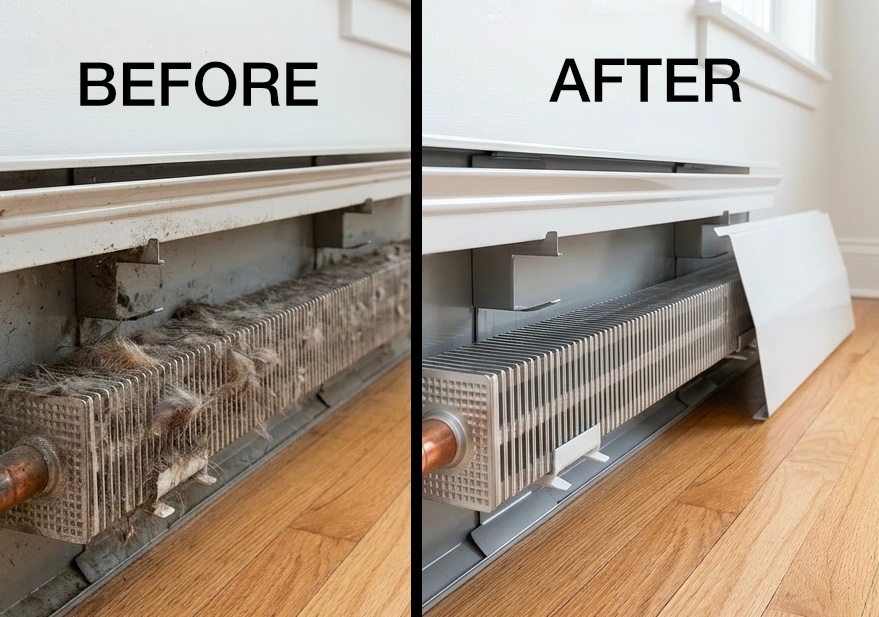
Clogged fins can't move air, so the hot water flows through but the heat stays trapped in the enclosure. The room feels cold while the boiler keeps running.
The first time the heat kicks on each fall, the dust sitting on the fins cooks off. If your house smells like scorched dust every October, the fins are dirty.
Baseboards are a magnet for pet hair, and every cycle pushes a little of that dust into the air you breathe. Clean fins mean cleaner air moving through every room.
When heat can't get out of the fins, the thermostat keeps calling and the boiler keeps firing. Clear fins deliver the heat you're already paying for.
Most homes take two to three hours depending on how many feet of baseboard you have. We work room by room, and your floors, walls, and furniture stay clean the whole time.
Drop cloths go down along every run of baseboard and furniture gets moved just enough to reach the covers.
Front covers, dampers, and end caps come off each section so the full length of the fin element is exposed.
HEPA vacuuming and brushing pull out the loose buildup. Matted sections get a compressed-air or steam pass with the vacuum catching what comes free, so the dust ends up in the vacuum, not in your room.
Bent fins get combed back into line, and the covers, end caps, enclosure, and the floor underneath are wiped clean.
Everything goes back on straight and tight, and we walk you through what we found before we leave.
Once a year, ideally in late summer or early fall before the heating season starts. Homes with pets or dusty conditions may want it every season. If yours have never been opened up, and most haven't, they're due.
Running a vacuum along the outside of the cover picks up the surface dust and leaves the fins packed. The buildup that matters is inside the enclosure, between the fins, and it takes removing the covers and working the element from both sides to clear it.
We ask that the heat be turned down or off for the rooms we're working in so the fins are cool to handle. We'll let you know when you can turn it back up, usually as soon as we're done.
Yes. Electric baseboards collect the same dust and hair, and a dirty element is the usual reason for that hot, dusty smell when they first come on. We cut power at the breaker before opening them up.
If a section is stone cold while the rest of the house heats, that's usually air in the line, a closed valve, or a zone problem, which is a job for your heating contractor. Cleaning fixes weak heat from clogged fins, and we'll tell you honestly if what we see looks like something else.
Pricing depends on how many feet of baseboard you have and how heavy the buildup is. Tell us roughly how many rooms have baseboard heat when you book and we'll confirm your exact price before any work begins.
Request your baseboard cleaning right here or give us a call. We'll confirm your exact price before any work begins. No surprises, no obligation.
The fastest way to reach us. If we're up a ladder, leave a message and we'll call right back.
